Tire Repair or New Installations
Need a repair or new tires? We’ve got you covered.
Professional alignment resets camber, caster, and toe to manufacturer specifications so your car tracks straight, steering feels natural, and tires wear evenly.
Uneven tire wear or pulling to one side?
Those are classic misalignment symptoms. Correcting alignment protects your tires and restores straight-line stability.
Fuel economy slipping?
Misalignment increases rolling resistance. Fixing it helps your vehicle roll efficiently and can improve MPG over time.
Steering wheel off-center?
If your wheel isn’t straight while driving straight, an alignment check is due—especially after curb or pothole impacts.
A wheel alignment sets suspension angles so each tire maintains optimal road contact. Over time, components wear and day-to-day bumps nudge settings out of spec, which changes how your vehicle tracks and steers.
Impacts like potholes and curb strikes are the most common triggers. Normal wear in bushings, ball joints, and tie-rod ends also introduces slack that lets wheels point slightly away from where they should.
Typical causes and their effects include:
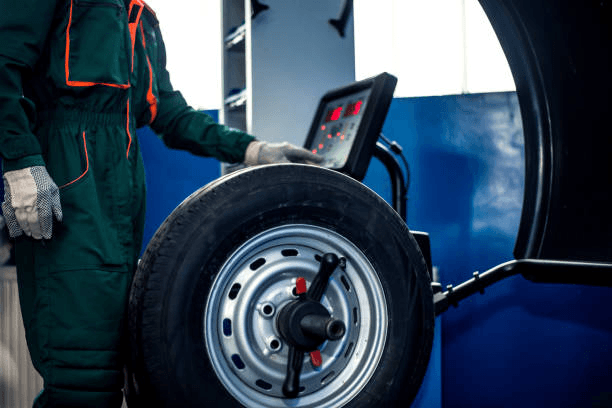
We measure camber, caster, and toe with a computerized aligner and adjust them to your vehicle’s specifications so it tracks straight and tires wear evenly.
You might notice the car pulling to one side, the steering wheel not sitting straight, or your tires wearing unevenly across the tread. These are small clues that the wheels aren’t tracking the way they should.
A typical alignment takes less than an hour. If our inspection finds worn suspension parts that need attention first, that may add a little more time to the visit.
Your alignment will hold until something causes it to shift—like hitting a pothole, bumping a curb, or normal wear in suspension joints. Checking alignment annually or with each new set of tires helps catch problems early.
Many modern vehicles are designed for four-wheel alignment, meaning both the front and rear angles are measured and adjusted. If the rear isn’t adjustable, we still measure it so the front wheels can be aligned to the rear for accurate tracking.
Vibration is usually linked to wheel balance, tire condition, or bent rims. However, misalignment can speed up uneven tire wear, which over time may create a vibration or humming feel as you drive.
Keep your ride smooth and your tires lasting longer with a full range of maintenance options.
Need a repair or new tires? We’ve got you covered.