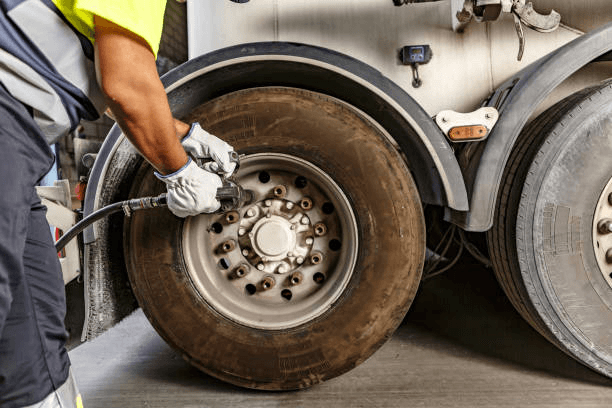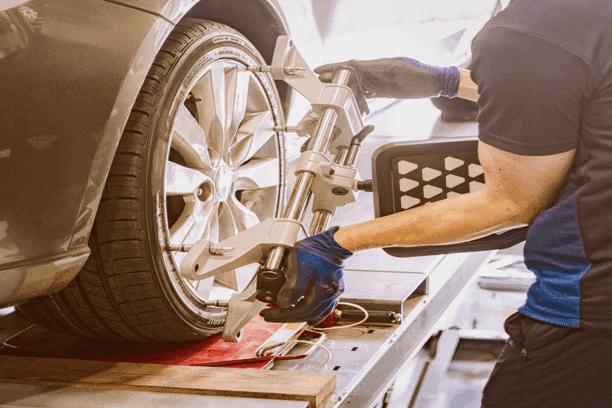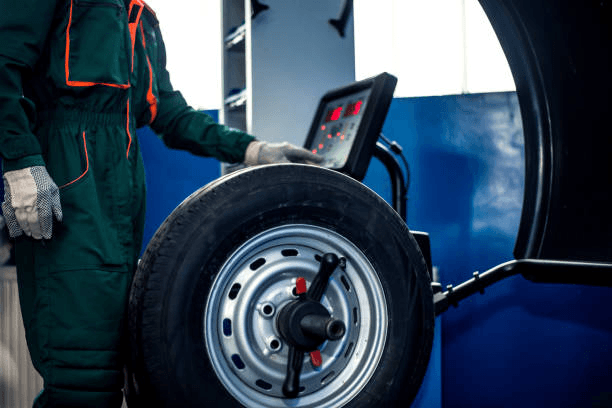
Whether patching a puncture or fitting a fresh set, we make sure your tires meet safety specs, perform reliably, and last as long as possible.
Got a slow leak or tread damage?
Minor punctures in the tread can often be repaired instead of replaced — saving time and cost.
New tires needed?
We’ll guide you in selecting the right size, type, and perform precise installation + balancing for optimal performance.
Worried about sidewalls or big damage?
Some damage can’t be safely repaired — we inspect carefully to keep you safe on the road.
A proper tire repair is more than plugging a hole. We dismount the tire, inspect the inside and outside, and if the puncture meets safety standards, we apply a patch-plug combination that seals the inner liner and fills the injury path.
Repairs are only considered safe when the damage is within the tread area, not too large, and not overlapping with previous repairs. Sidewall cuts, bulges, or exposed steel belts mean the tire cannot be safely repaired and should be replaced instead.
By repairing tires the right way, you restore air retention, keep your vehicle safe, and avoid premature tire replacement costs.
When replacement is the safer option, proper installation ensures your new tires perform the way they’re designed to. Each tire is carefully mounted to the wheel, inflated to the correct pressure, and balanced for a smooth ride.
During installation, we also inspect the wheels for cracks or bent rims, replace valve stems if needed, and torque the lug nuts to manufacturer specifications for safety.
Professional installation not only helps prevent vibration and uneven wear, but also maximizes the life and performance of your new tire set.
We inspect whether a tire can be safely patched. If not, we remove and mount a new one, balance it, check rim/valve condition, and finish with correct inflation and bolting.
If the damage is solely in the tread, isn’t too large (≈ ¼ inch / 6 mm), and no prior repairs overlap in that exact area, it may be repairable. Sidewall or shoulder damage typically rules out repair.
We remove the tire to check inside and out, clean and prepare the punctured area, apply rubber stem + patch combo to seal both outer hole and inner liner, then re-mount, inflate, and test for leaks.
Old tire is removed. Rim and valve stem inspected. New tire is mounted, balanced, inflated to the correct pressure, lug nuts torqued, and we check the job with a road test if needed.
Findings like bulges, sidewall damage, big tears, exposed steel belts, damage beyond the shoulder, or if prior repair was too close. Also, if you’re seeing uneven tread wear or frequent flats, replacement is often safer.
Repairing is typically less expensive when it’s minor. But if damage is large, unusable, or unsafe, replacement with a new tire offers better long-term safety and value. New tires also bring additional install costs like mounting, balancing, and disposal of old tires.
Keep your ride smooth and your tires lasting longer with a full range of maintenance options.